OSWALD
in
MEXICO
Seeks a Cuban Visa
Topic: Oswald in Mexico
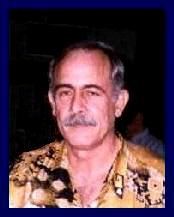 A
presentation given in
Rio de Janeiro, August 1995.
A
presentation given in
Rio de Janeiro, August 1995.
By Arturo Rodriguez
(Former Cuban Security Agent)
The visit of Lee Harvey Oswald to the Cuban Consulate in
Mexico, in the
fall
of 1963, was the highlight of a project to blame Cuba for
the
assassination
of President Kennedy.
To understand the scheme of the plot, it will be necessary
to look at
Oswald's
past, his arrival in New Orleans in the spring of the same
year, the
activities
he carried out there which identified him with supporters of
the Cuban
Revolution,
the incidents with the Cuban exiles and the publicity given
to this,
his
encounter with two elements of the CIA in September in
Dallas, the
incident
with the Cuban exile, Silvia Odio, and finally his trip to
Mexico and
the
negotiations carried out in the Cuban and Soviet Consulates
to obtain a
visa
to allow him to travel to those countries.
In the investigation of Oswald's past, from the time he
entered the
U.S.
armed forces on Oct. 24, 1956, until his return from the
Soviet Union
on
June 2, 1962, it was evident that we were witnessing an
intelligence
agent,
who "deserted" with a very definite purpose, subordinated to
a project,
directed
by the CIA or other U.S. intelligence service. We
believe it to
be
that today, in light of the information known, shared by
many, the
reason
why we won't dwell on its reasoning.
Nevertheless, we are
at
your disposal to discuss our arguments at a convenient time.
In that way, we move to the analysis of the incidents that
begin to
unfold
from the time Oswald arrived in New Orleans in the second
half of April
1963.
Immediately after his settlement in New Orleans, Oswald
started to
conduct
public activities that would tie him as an "ardent"
sympathizer of the
Cuban
Revolution. A review of all those activities, are
known by all
present
here, indicate:
1. Oswald and his manipulators, conscientiously
documented his
membership
in the Comite Pro Justo Trato a Cuba (Fair Play for Cuba
Committee).
Letters to the president of this organization, and the
editing and
publishing
of pamphlets related to the defense of Cuba, were actions
taken by
Oswald
during this period. He also sent correspondence to the
Communist
Party,
to the newspaper of this organization, and finally to the
Soviet
Consulate,
where he expressed his wishes to return to the USSR.
The incident with the Cuban exiles, where apparently he
tried to
provoke
the group headed by Carlos Bringuier, and had a public
confrontation
with
them, when he (LHO) was caught handing out propaganda
favoring Cuba
were
all part of an "episode" concluded with the radio debate
between Oswald
and
Bringuier, where Oswald declared himself a Marxist and
Castro
sympathizer.
I believe we need not dwell on this topic, since it is
evident that
those
actions had one purpose, to document Oswald's pro Castro
affiliation
-
for later use.
As you will remember, this information was later manipulated
by the
press
after Kennedy's death.
2. According to the investigations of the colleague Gaeton
Fonzi,
Antonio
Veciana confessed that at the end of August or in early
September of
1963,
while attending a meeting in Dallas with his case officer
"Maurice
Bishop".
When he arrived at the meeting place, he (MB) was talking
with a young
North
American man which he later recognized to be Oswald.
Veciana
added
that when he arrived, the meeting (with the young man) ended
and the
young
man left, and he stayed with Bishop to talk about his
business.
(Note: this
is not in
the
transcript - but I had to read
this
sentence
several
times because Rodriguez keeps using
he he
he he and
it
is difficult to figure out which he,
he is
referring
to
---HE HELL! You should check it out
with
the
colleague
Gaeton!)
This meeting was very strange. No intelligence officer
makes
appointments
in the same place without a reason, with two agents of
different
operations.
There had to be a need for this.
Later, Veciana told Fonzi that Bishop asked him, after the
Kennedy
assassination,
to try to bribe a relative, Guillermo Ruiz, who worked as a
diplomat at
the
Mexican Cuban Embassy, to testify that Oswald was a Cuban
agent.
However, around that time the theory of the lone assassin
was
established,
no one wanted, not even the CIA, to know any different.
Then, why did the three of them get together in Dallas in
the Fall of
1963?
Was it by chance as explained by Veciana? We don't
think
so.
There was something planned there in which Veciana, Bishop
and Oswald
had
to participate in.
-It could have been the intent to recruit Ruiz's wife, a few
days
before
the Kennedy assassination. Maybe, the visit to
Silvia
Odio.
And thinking broadly, as a result of uncovered CIA
operations, it could
have
been a presentation among agents, one Veciana, who was
infiltrated in
an
apparent anti-Castro group El JURE, but in reality it was
plotting
against
Kennedy under orders from Cuba, and the other, Oswald, who
was destined
to
unmask the conspiracy, traveling to Cuba to meet with the
"bosses" (of
the
conspiracy).
Veciana was a friend of Silvia's father, they knew each
other from Cuba
and
Oswald was an experienced agent that had carried out a
mission in
Moscow.
This hypothesis could explain Oswald's visit to Odio and the
explanation
of the two Latins about their affiliation and liking of Leon
Oswald.
On our part, in 1973, we received information through two
different
sources,
close to Veciana, where it was affirmed that "Bishop" was a
name given
by
him to David Phillips. As it is known, Phillips was
the boss of
the
operative forces of the CIA, in charge of the Cuban case in
Mexico City.
3. In June of 1963 Oswald applied for his U.S.
passport, with
intentions,
according to his letter to the corresponding agency, to
travel to
Western
Europe, the USSR, Finland and Poland, - which was approved
the next
day.
It is really strange that a renegade like Oswald be granted
a passport
so
quickly, and that the FBI, in charge of following all
possible Moscow
agents,
would have allowed it, since it is known that these
applications are
made
known to all intelligence organizations, especially in a
case like this
one.
4. Oswald tried to travel to Cuba from Mexico.
On the 17th
of
September he visited the Mexican consulate in New Orleans
applying for
a
tourist visa for 15 days to travel to that country - he gets
it with no
problems.
On the 26th of the same month, according to the Warren
Commission,
Oswald
boarded a bus in Houston, in route to Laredo at 2:35
a.m.,
arriving
in that city at approximately 1:20 p.m. He must have
crossed the
border
around noon on the 26th, arriving at the Aztec capital at
10:00 a.m. at
which
time he registered at the Comercio Hotel.
The Cuban consulate in Mexico City was located on the lower
floor of a
building
whose top floor was occupied by the commercial office of the
embassy.
A room on the lower floor was shared by both offices as a
waiting
room
or lobby.
Lee Harvey Oswald, arrived at the Cuban consulate on
September 27,
1963.
Back then the office was represented by Eusebio Azcue Lopez
who was in
the
process of turning over his responsibilities as general
consul to
comrade
Alfredo Mirabal Diaz, who had been named to that post on
July first of
that
year, and the secretary Silvia Tirado de Duran, a Mexican
national.
Comrade Azcue was 52 years old, Mirabal 40 and Mrs. Duran
26.
The Cuban consulate working hours were from 10:00 a.m. to
2:00 p.m.,
Monday
through Friday for the general public. Saturday was
set aside for
internal
matters -when necessary.
Statements given by witnesses Eusebio Azcue and Alfredo
Mirabal and by
the
Mexican Silvia Duran--known to all of you--allows us to
establish the
fact
that an individual identified as Lee Harvey Oswald visited
the Cuban
office
on three occasions.
Silvia Duran recalls these visits to be on the 27th,
although Azcue
considers
that the first two (visits) took place on that day which
happened to
have
been a Friday, and the third on Saturday the 28th.
Mirabal's
statements
are not so precise.
The chronology of the visits were known 15 years after the
assassination.
While Mrs. Duran's statements collected in total during
interrogations
conducted
by the Mexican police, given to the CIA station there and
later to the
Warren
Commission, (outlined) the relation of Oswald's encounters
and other
important
data.
A brief review of these visits can be resumed in the
following:
a. The people that personally take care and speak to
him were
secretary
Duran and the consul Azcue. Comrade Mirabal, who did
not speak
English,
is an eye witness of his presence on more than one occasion,
at a
distance
of approximately four meters.
b. Oswald applied for a visa to Cuba on his way to the
USSR,
expressing
his wish to travel on the 30th of September, staying in
Havana from one
to
two weeks.
c. He showed documents and said he belonged to the
U.S. Communist
party
and was secretary of the Fair Play for Cuba in New
Orleans. He
showed
a dubious passport - and as you can remember- he was issued
a new
one-stating
his residency to be the USSR from October 1959 to June 1962
and a
marriage
certificate with a Soviet citizen.
d. Silvia Duran made up the form for his visa
application adding
to
it the photos given by the subject, which was signed in her
presence.
This form included all documents presented by the subject
for the
purpose
of his application and was signed by Alfredo Mirabal (at the
bottom of
the
application) attesting to this.
e. The Cubans, under instructions in force at that
time, told the
applicant
that it was impossible to grant him a visa for the time he
requested it
for,
until the country of destination had granted it.
f. The situation of this subject was such, that Azcue
as well as
Duran
called the Soviet consulate to explain his case.
g. During the subject's visit to the Soviet consulate,
it was
explained
to him that requirements for granting a visa to that country
took
generally
two to three months, the reason why he would have to wait
that long.
h. He returned to the Cuban consulate somewhat
disturbed and
tried
to force the visa granting, leading to an altercation
between himself
and
consul Azcue, for which he was ordered out of the office.
This altercation was in the presence of comrade Mirabal and
Antonio
Garcia
Lara, an official of the commercial office, who, at hearing
the
discussion
and thinking this might be a provocation, went downstairs to
the
consulate
office and was able to see the subject leaving.
Another witness to the visit was Guillermo Ruiz, in charge
of the
commercial
office, who at the time was going to his office, was
intercepted by
Azcue
who was arguing with a North American subject and asks him,
since he
spoke
good English, to explain to him again why he was denied the
visa and
the
reasons why. Ruiz did this and had a chance to look at
the
subject's
face for a few seconds at a short distance.
Since the moments after the Kennedy assassination, our
embassy's
personnel
in Mexico noticed, with the exception of Azcue who was back
in Cuba,
that
the accused assassin was the same person that had visited
them in
September.
Alfredo Mirabal informed his Ministry officially, Lara only
commented
about
it, given the small participation they had in the events and
knowing of
the
report made by Mirabal, an official superior to them.
On his part, Azcue in Cuba, did not recognize Oswald's
photos published
by
the press as the person who visited the Cuban Consulate in
Mexico.
This contradiction between Azcue and Mirabal, were made
evident in
statements
given by both to the investigators of the Select Committee
in 1978.
As for Mrs. Duran, she recognized Oswald from the first
moment as the
person
that she helped in the Cuban Consulate at the end of
September 1963.
The investigations done by us show that the typewriter used
to fill out
the
questionnaire form of the subject said to be named Oswald,
was the same
one
as the one in Mrs. Duran's office, used to fill out other
forms.
The
photo was Oswald and if we note the Warren Commission's
verdict, the
signature
in the document was also his. There is one additional
element.
The signature of comrade Mirabal, attesting to the data
given by the
applicant,
was his. There is no doubt.
An arithmetic addition of the testimonies tell us that four
[persons]
recognized
Oswald as the person that visited and requested a visa, and
one and
only
one, Azcue, did not recognized him. Other evidence
already
explained,
points out that it was Oswald and not someone else who
visited the
Consulate.
As such, we conclude that the subject that identified
himself as Lee
Harvey
Oswald, during a visit to the Consulate in the month of
September of
1963,
to request a transit visa to Cuba, was indeed the same
person, that
after
the----was identified by the same names.
5. Nevertheless, these were not the only events that
took place
at
that time. Sometime after the Kennedy assassination, two
witnesses, the
Mexican
Elena Garro de Paz and the Nicaraguan Gilberto Alvarado
Ugarte, alleged
that
Silvia Duran was connected to Oswald during the visit.
Garro even
commented
that the consul Azcue, had said during a conversation held
with the
poet
Emilio Carballido, that "Kennedy had to be killed".
It seemed to us that those elements were in the works - in
what we call
in
the business - of an "active measure" -in other words,
intentional and
false
information geared to deceive or divert attention of an
issue or
objective.
Another incident to consider was the one occurring a few
days before
the
assassination. The intent to compromise the wife of
comrade
Guillermo
Ruiz, Hilda Veciana. According to her, walking towards
the
embassy,
she found a large roll of dollar bills in the middle of the
sidewalk.
When she stopped, stunned by what she saw, a citizen that
could have
been
Mexican, approached her and said: "Lady, you have dropped
your money,
please
pick it up - it is yours". Meanwhile two other people
approached
her,
the reason why Hilda became scared. She ran towards
the embassy,
where
two comrades came out to help her, but of course, they found
nothing.
We know that David Phillips was the boss of the operative
forces of the
CIA
in the Aztec capital (they are so dramatic- why can't they
say Mexico
City).
Also, the strange meeting in the first few days of September
in Dallas
with
Veciana and Oswald. It is not necessary to argue the
tight bond
with
the false "Cuban case", which he states in his own
autobiography
book.
Another essential fact, was that Phillips was an expert in
psychological
warfare, in other words, in the fabrication of lies and half
truths,
something
which he admits to. (that he takes credit for lies
etc.)
Other information came to aid us in understanding this
plot. The
Nicaraguan
Alvarado, turned out to be an agent of the Somosa
intelligence and the
Garro
information, who declined to testify to the Select Committee
in 1978,
verified
by, proceeding from a source, that-- (Darn - they beat
around the bush)
according
to declassified information by the CIA in 1993, -- was an
official of
the
U.S. embassy in Mexico and according to our records, a CIA
official.
Mr. Charles Thomas, committed suicide in 1970.
According to what Phillips narrated in his book, already
mentioned, the
covering
(I think he means the masking device - conceal -
pretext) of the
Cuban
embassy at that time was total. Lets see what he says:
"The boss of the Cuban Section (he refers to when he arrived
at the
embassy,
before the N. del A events), was Wally, whom I had
encountered for the
first
time at the University of Chile, in Santiago. He had
also been
hired
by the CIA as an intelligence officer".
"Wally's task was to maintain total coverage of the Cuban
embassy,
ideally to cover a hostile apparatus (installation) abroad
with
intelligence
means including: inside spies informing about their own
government;
able
to read correspondence to and from the embassy; able to
listen to
telephone
conversations; at least a microphone to transmit inside
secrets; able
to
obtain photographs of everyone working at the embassy and
those who
visited
and the access to trash disposal......it would be incorrect
to say what
was
Wally's total coverage of the Cuban embassy, when I arrived
in Mexico
in
1961, but it was pretty good..."
As known by those present here, -- having been informed by
the Select
Committee
-- the photographic post across from our embassy, located in
the street
Francisco
Marquez 149-1 Colonia Condesa, was operated by a Cuban,
posing as a
Colombian
named Augusto Cesar Rodriguez Gallegos, from where everyone
entering
and
leaving the diplomatic office was photographed.
Oswald visited at least three times the Cuban consulate and
on one or
two
occasions the soviet consulate, that was also
"covered". However,
after
the assassination none of the photos appeared and the one
that
did
was strange.
If the CIA obtained photos, information, telephone
recordings, and
microphone
recordings placed in the sofa of the Cuban consulate, years
later
uncovered,
- why did all this evidence disappear?
Reflecting on all of this we make the following
hypothesis.
Everything
was arranged to document Oswald's visit, therefore there was
a plot to
involve
Cuba in the assassination that was to later "unchain"
the
American
reply.
However, almost immediately after Oswald's arrest in Dallas,
when the
requests
for Oswald's Mexico material starts by the (principal
center?
meaning
an official agency) - incorrect information was given.
Was it
that
the arrest was not planned by those who plotted, threw out
(did away
with)
the well conceived plan to blame Cuba? The truth is
that almost
immediately
after Oswald's assassination, in the coarse and precipitated
conditions
known
to all, appeared the theory of the "lone assassin" and the
"Cuban plot"
took
second stage. What are the reasons? What are the
motives?
These are essential questions that North American
authorities should
answer
to the public and once and for all make it clear about the
assassination
of president John F. Kennedy.
End of Page
Copyright
1998-2014 Cuban Information Archives. All Rights
Reserved.


